

Creator groups implore UK government to act on AI protections or see creative sector collapse
Trade orgs propose ‘CLEAR’ regulatory framework for 'ethical, human-centred AI'


💥HURRY! Our 20% discount on monthly and annual subscriptions expires soon. Gain access to all our posts plus the full archive, and support Charting Gen AI’s mission-based journalism. Please use this offer coupon:
WHAT’S HAPPENED?
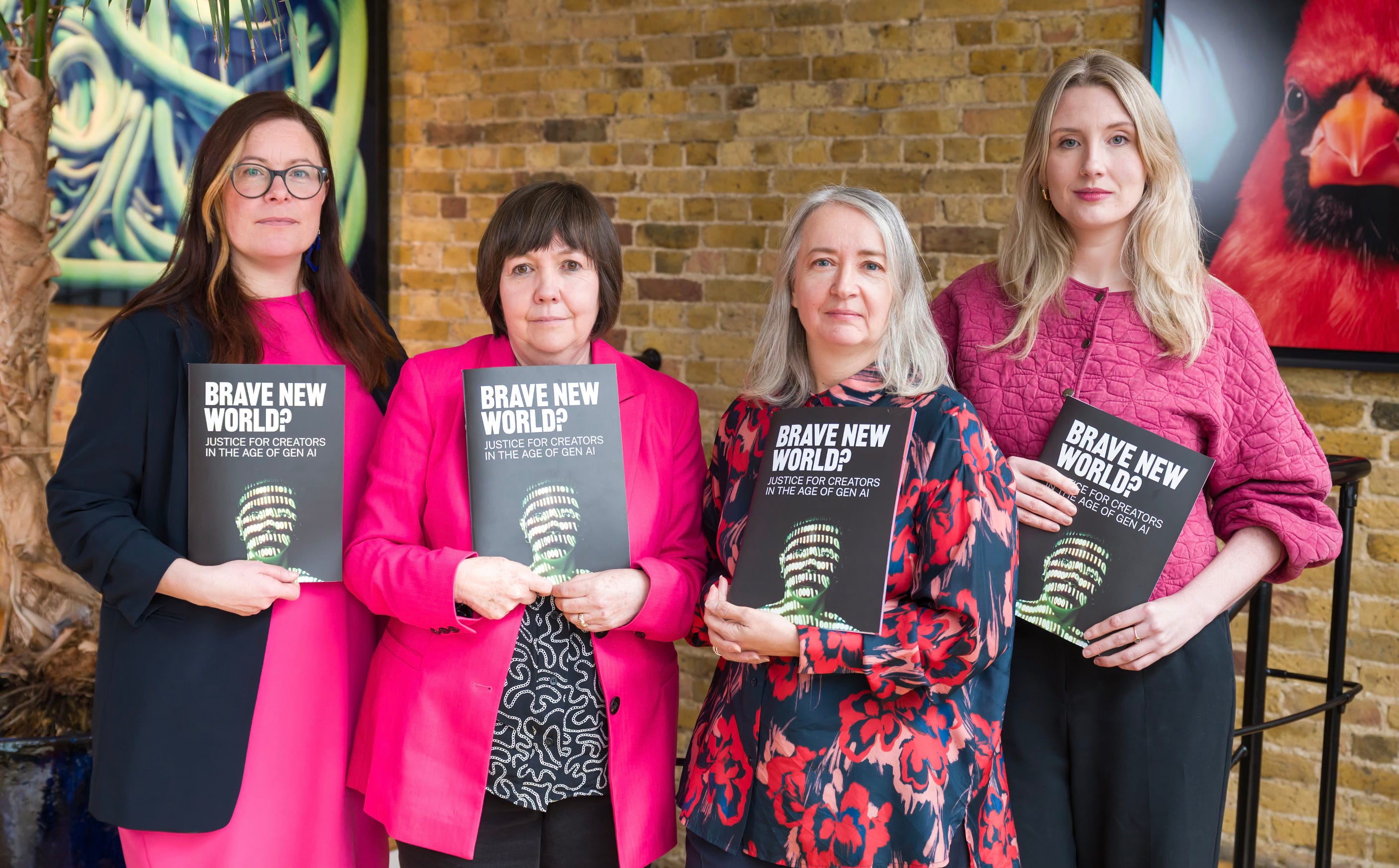
A COALITION of creator groups is today calling on the UK government to implement immediate measures aimed at protecting the nation’s creative sector, or risk losing it. In a new report, groups representing authors, illustrators, musicians, performers and photographers said creators’ incomes were being eroded “in an increasingly AI-driven world”, and proposed a five-point regulatory framework designed to prevent the creative economy’s complete collapse.
Compiled by the Society of Authors (SoA), the Association of Illustrators (AOI), the Independent Society of Musicians (ISM), Equity, and the Association of Photographers (AOP), the report said that while “generative AI is being sold as a major driver of the fourth industrial revolution” the UK had suffered the “industrial scale theft” of its cultural riches as AI developers trained their models on “human-made works without permission, payment or even acknowledgement”.
“The result is an intellectual property free-for-all with multinational firms profiting while creators see their livelihoods disappear.”
According to survey data gathered across the five trade organisations:
86% of authors have suffered reduced earnings while 57% believe their careers are no longer sustainable
32% of illustrators have lost commissions as clients turn to AI
73% of musicians fear AI threatens their ability to earn a living
65% of performers and 93% of voice artists consider AI to be a threat
58% of photographers say they have lost assignments to AI
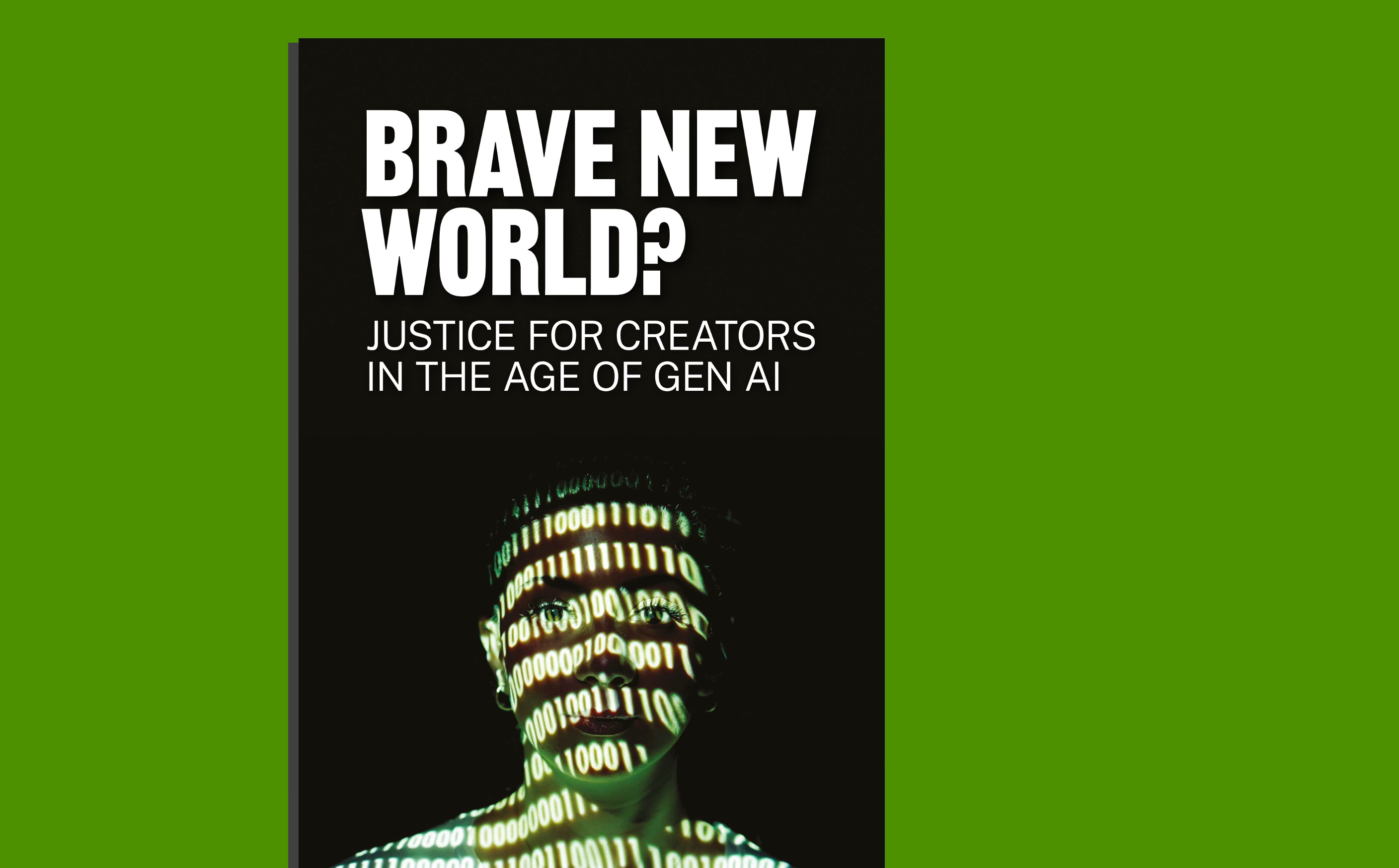
In her foreword to the report, Brave New World? Justice for creators in the age of gen AI, creators’ champion Baroness Kidron said ministers had failed to explain why “global AI corporations worth billions should be granted privileged access to the cultural assets of this country” while creators were being “asked by their own government to sacrifice their futures”. Last year Baroness Kidron sought to introduce emergency transparency protections for creators, but her efforts were repeatedly blocked by the Starmer administration as it looked to dilute UK copyright laws in favour of AI developers.
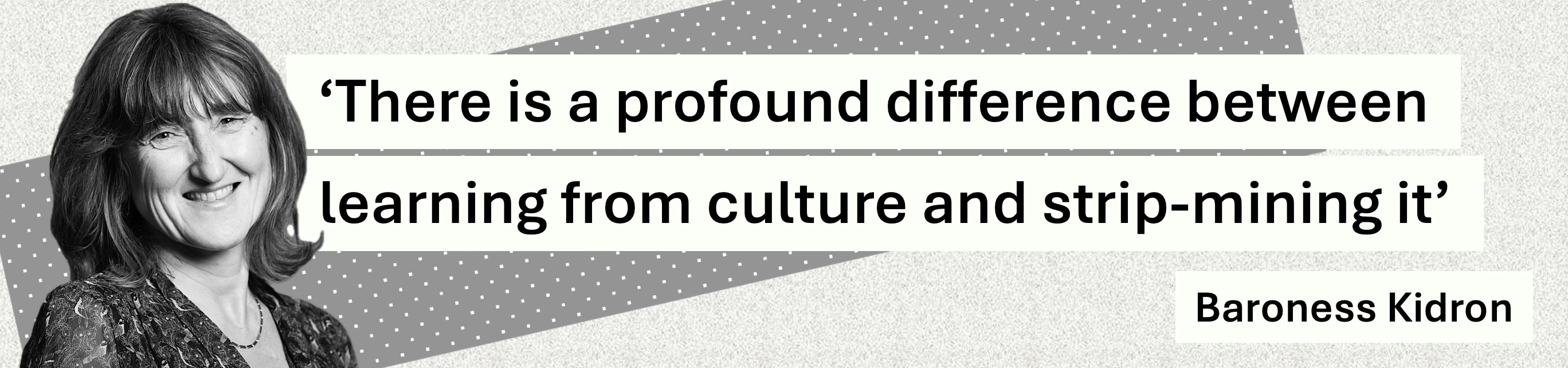
“This is an existential moment for creators,” she wrote. “Copyright is not a technical inconvenience; it is the mechanism that allows creators to earn a living and to retain control over the meaning and integrity of their work. Remove it, and you do not merely damage an industry — you dismantle the conditions under which culture itself can exist.” Baroness Kidron, an award-winning filmmaker who sits as a crossbench peer in the UK upper house, said the property of citizens was “being taken, in plain sight” as wealth was transferred “from creators to corporations, from the many to the few, and from the UK to the US”. “There is a profound difference between learning from culture and strip-mining it.”
The trade groups called on the UK government to adopt their ‘CLEAR’ regulatory framework for “ethical, human-centred generative AI deployment”:
C — CONSENT FIRST
The UK’s Copyright, Designs and Patents Act (CDPA) should be amended to ensure works cannot be used to train Al models without explicit, prior consent.
L — LICENSING, NOT SCRAPING
A statutory licensing scheme should be introduced for Al training “that provides a lawful, transparent route for Al developers to access creative works, ensuring fair payment and attribution to creators”.
E — ETHICAL USE OF TRAINING DATA
Enforceable ethical standards should be established “for the sourcing, curation and application of training data, including a ban on non-consensual scraping and misrepresentation of authorship”.
A — ACCOUNTABILITY
To include mandatory registration and reporting of datasets used for Al training, creating public, auditable records of licensing arrangements overseen by the Intellectual Property Office (IPO); the labelling of Al-generated works; and an obligation on AI developers “to disclose the use of creative works to creators”.
R — REMUNERATION AND RIGHTS
Creators’ works should be attributed and paid for when they are used in AI model training. In addition a personality right protection should be introduced for creators to protect their performance or style.
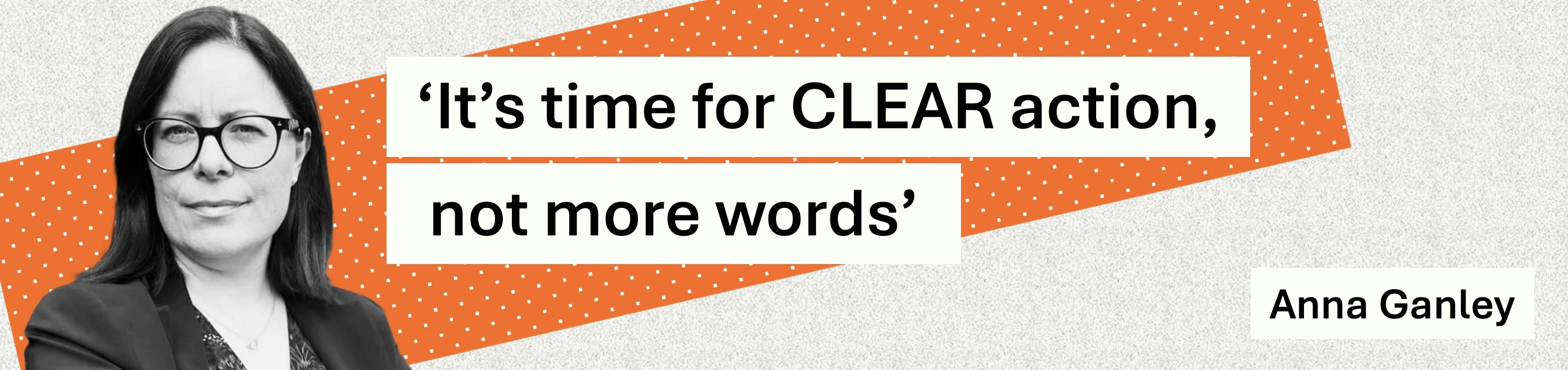
Anna Ganley, CEO at the SoA, told Charting: “Generative AI and machine learning has turbo-charged plagiarism on a global scale. We urgently need government intervention to enforce UK copyright law, protect our data, and demonstrate its support for original human creativity and the UK’s £124.6 billion ($170 billion, €140 billion) creative industries.” Ganley, who is also chair of the Creators’ Rights Alliance (CRA), a coalition of 21 creator-led organisations representing over 500,000 creative workers, added: “It’s time for CLEAR action, not more words.”
Isabelle Doran, CEO at the AOP, told Charting that a new survey conducted this week had found her members’ lost annual income averaged £35,000 ($48,300, €40,400) per photographer. Nearly all members (98.4%) expected to be compensated for past copyright infringements while 100% wanted AI developers to be transparent about the use of their works in generative model training.
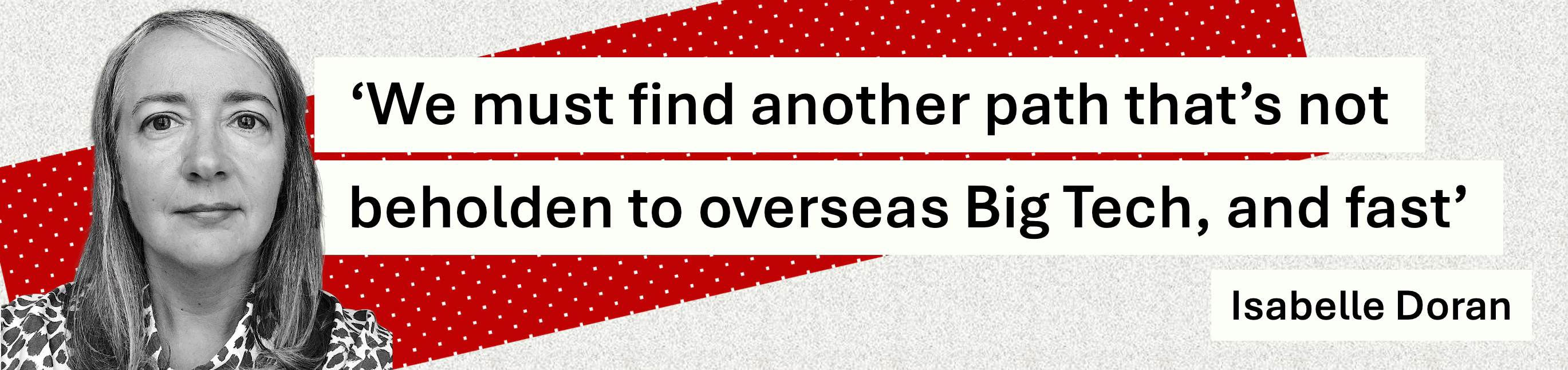
“I remain deeply worried that the government still can’t see that we’re at the coalface without a hard hat. Our members are under enormous financial pressure and are also having to hear first hand from their clients that they’re using generative AI instead,” said Doran, who is also vice chair of the CRA. “We must find another path that’s not beholden to overseas Big Tech, and fast,” she added.
WHY SHOULD WE CARE?
✨The creator groups’ evidence-rich report — an absolute must-read for policymakers not only in the UK, but worldwide — paints a bleak picture of an industry sector on the brink of ruin. Quotes in the report include an illustrator who feels a “sense of dread knowing AI generators are everywhere”; a musician who fears record labels will strike “awful” AI deals which are “basically worthless to individual composers”; and a photographer who lost a €15,000 (£13,000, $18,000) contract to a rival agency offering a 100% AI-generated campaign. “Brands are now turning their backs on our craftspeople — pushing them further into isolation. That hurts.” Case studies include bestselling author Vanessa Fox O’Loughlin (who writes as Sam Blake) discovering an AI-generated dark romantasy trilogy on Amazon under her pseudonym without consent, and illustrator Roman Muradov who describes how AI-generated images mimicking his unique style were repackaged and sold by others without attribution or payment. As the report says, “this is not just a fight for jobs; it is a fight for connection, curiosity and culture itself”. As she launched this week’s AI skills drive — which as we reported on Wednesday didn’t totally go to plan — UK tech secretary Liz Kendall conceded that AI would “change jobs”, and that “some jobs will go”. How many is open to speculation. What is clear from this report is that highly skilled creative folk are at the sharp end, and suffering. And as AOP CEO Isabelle Doran told us, expecting those with little or no work to retrain using AI would be “like putting a victim in front of their perpetrator and saying ‘now make friends’”. Kendall and her team must read this report, and as a matter of urgency, act on its very reasonable recommendations.
RELATED:


▪️Charting Gen AI’s Weekly Newsletter will later today have full coverage of the week’s developments. Subscribe now so you don’t miss it!

1) I like the Baroness. A lot.
2) Unless the USA does a sharp U-Turn away from Trump’s “guardrail removal service” on behalf of techbros, I may have to move to the UK if I keep writing.